
Moving and Storage Indianapolis IN
When the dates do not line up, moving and storage Indianapolis households rely on is the middle step that holds a move together: belongings packed, carried, and placed into storage while one home ends and another begins. This page explains how storage fits around a move, how short stays differ from long ones, and how to compare storage options before you commit to one. Sugar Rush Moving is open 24 hours, every day — call (317) 961-2712 to talk through your dates and what you need stored.
Service overview
What moving and storage means in practice
Moving and storage is a timing solution. A home sale closes before the new lease starts, a renovation pushes a family out for weeks, a move runs in stages, or a business needs overflow space off the floor — in each case belongings need somewhere to sit between one place and the next, and someone to move them there and back. The storage part and the moving part are separate questions: the space itself, how long things stay, how often they need to be reached, and what conditions they sit in. The moving part is the packing, carrying, loading, and stacking that gets belongings into storage in an order that makes sense when they come back out. This page keeps the two apart. It explains the kinds of stay, compares the kinds of storage in general terms, and lists the questions worth asking before you agree to anything — because the right arrangement depends on your dates, your inventory, and how often you need access.
! Problems we solve
Moisture damage over a long stay
Indiana humidity and seasonal temperature swings are hard on wood, upholstery, paper, and electronics left in storage. Before a long stay, ask what conditions the space holds through the seasons, what the term used to describe it actually means in practice, and what happens if those conditions fail. Packing and preparation matter too — ask what is recommended for the items you care most about.
The wrong amount of space
Too much space wastes money every month; too little forces a second space or a rushed repack. The fix is an honest inventory before you commit: list the furniture and the boxes, note the largest pieces, and ask how the space is measured and what happens if the estimate is wrong. A space chosen from a list beats one chosen from a guess.
Boxes buried where they cannot be reached
A space filled floor to ceiling with no plan means every retrieval becomes an excavation. Label boxes by room, keep the things you need soonest reachable, and leave a way through. Ask how items are recorded as they go in, and how retrieval works when you need one box rather than the whole load.
Scope of work
Stays, gaps, and comparing the options
Storage around a move is rarely one simple thing. The length of the stay, the reason for the gap, and how the storage itself is arranged all change the questions worth asking. The four sections below keep those questions separate, so you can work out which arrangement fits your dates before you talk to anyone about space.
-
01
Short stays and gaps between dates
A gap of days or weeks — between a closing and a lease, or between homes during a staged move — needs storage that fits the gap and nothing more. Ask how short stays are arranged, how retrieval works if you need something back early, and what happens if the dates move. The moving part matters here too: belongings packed for a short stay should be packed to come straight back out.
-
02
Longer stays
A stay of months raises different questions: conditions through the seasons, how the space is paid for over time, and what happens if your plans change partway through. Ask how longer stays are arranged, what notice is needed to end one, and what preparation is recommended for furniture, wood, and paper goods. An inventory made at the start is worth its weight by the end.
-
03
Storage as part of a move
When storage sits in the middle of a move, the loading order is the plan: what goes in first, what stays reachable, and what comes out first at the other end. Talk through the whole route — home, storage, new home — in one conversation, and agree how items are recorded as they move between each stage.
-
04
Comparing storage options
Self-service storage, where you rent space and reach it yourself, differs from mover-handled storage, where the operator takes possession and controls the goods — and portable containers are a third shape again, loaded where they sit and then carried away. Each suits different needs for access, handling, and control. Compare them on access, conditions, recording, and how retrieval works, and ask which model any provider actually offers before you assume.
Storage solves a timing problem
Storage is rarely about space for its own sake. It is about dates that do not line up, rooms that need clearing, and moves that run in stages. Start with your dates and your inventory, and the right arrangement follows from those — not from the space alone.
Talk through your movePreparing belongings for storage
Wrapping and padding
Furniture bound for storage benefits from the same protection as furniture bound for a truck: blankets, stretch wrap, and corner protection, applied before the first carry. Ask what protection is planned for the pieces you care most about, and whether anything needs different preparation for a long stay.
Dollies and hand trucks
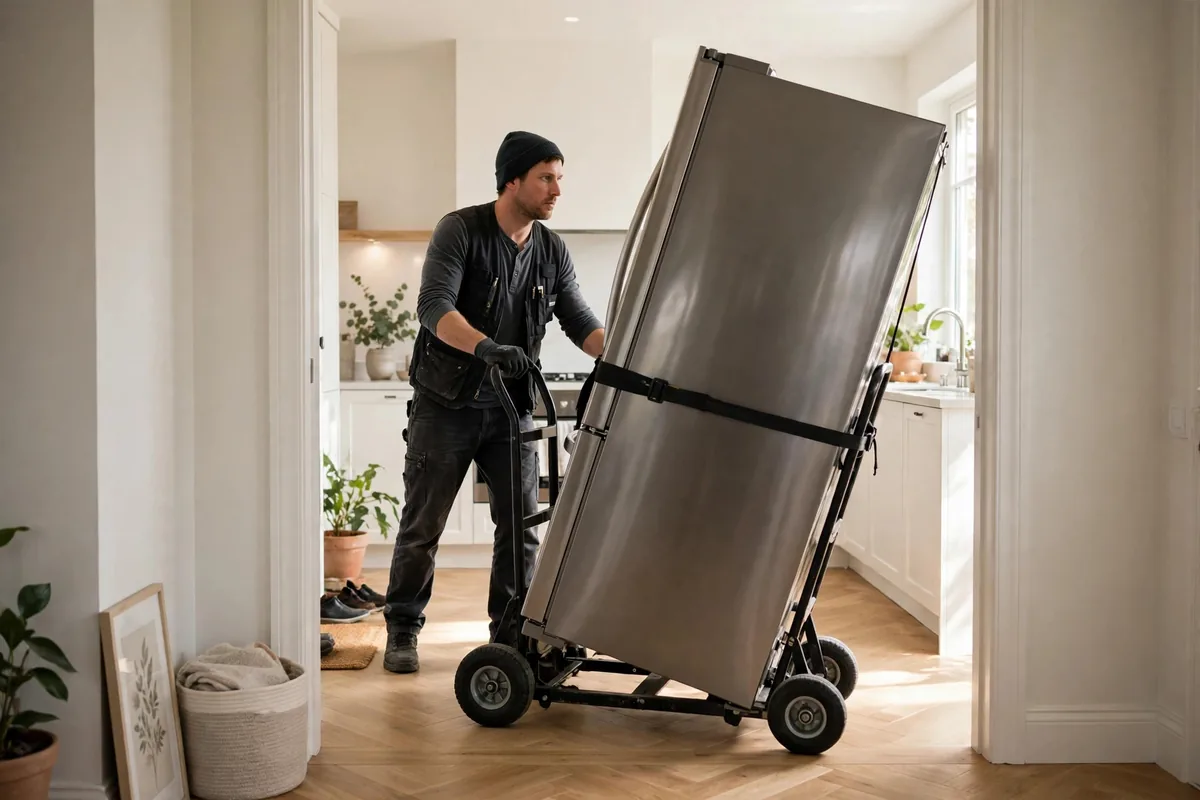
Heavy items — pianos, refrigerators, safes — need dollies and hand trucks suited to their weight, and a path planned around them. Describe the heaviest items on the call and ask what equipment the move calls for, and how the path will be protected.
Labeling and an inventory
A label on every box and a list of what went in, in what order, is what makes retrieval possible months later. Agree how items are recorded as they are stored, and keep a copy of the list yourself. The boxes you label well are the boxes you find again.
Loading order and stacking
Heavy items low, fragile items high, and the things you need soonest reachable: the loading order decides how usable the space is later. Talk through the order before the first box moves, and leave a way through rather than filling every inch.
Storage and moving in Indianapolis
Two Indianapolis realities shape storage decisions: the weather and the housing. Summers bring humidity and winter brings dry heated air and freeze-thaw swings, so conditions through the seasons are worth asking about for any stay longer than a few weeks — especially for wood furniture, upholstery, and paper. Older homes can have narrow stairs and tight doorways that need measuring before the largest pieces move, and buildings vary in how they handle elevator and loading access, so confirm what the building needs in advance. The busiest weeks of the year run from late spring through early autumn, when dates are harder to hold. Start with your dates, your inventory, and how often you will need to reach what is stored, and let those answers shape the arrangement.
Indianapolis areas with their own guides
- • Downtown Indianapolis
- • Broad Ripple
- • Meridian-Kessler
- • Castleton
Common situations

Storage help that starts with your dates
Talk through the dates, then decide
Storage decisions are usually made around a fixed point — a closing, a lease start, a renovation window — and those points do not always move when plans do. Call (317) 961-2712 and talk through your dates, your inventory, and how often you will need access. We are open 24 hours, every day, and we will tell you what the schedule allows rather than promise a slot we cannot hold. The questions on this page are a good place to start; bring them to the call.
How a storage move is planned
Inventory and dates
Start with what you are storing and how long: list the furniture and the boxes, note the largest pieces, and set out the dates at both ends. Ask how the amount of space is worked out from the inventory, and what happens if the estimate is wrong. The call is also the time to raise access — how often you will need to reach what is stored.
Agree the arrangement
Agree what the arrangement covers: the moving work, the space, the length of the stay, and how retrieval works. Ask how charges are put together, what is charged separately, and what notice is needed to end a longer stay. Ask for the terms in writing before you agree, and ask which storage model the provider actually offers.
Pack, load, and record
On the day, belongings are protected, labeled, and loaded in an order agreed in advance — heavy low, fragile high, essentials reachable. Ask how items are recorded as they go in, keep a copy of the list, and confirm how retrieval works before the doors close.
How storage-related quotes are put together
A storage quote usually has more than one part: the moving work that gets belongings into storage, the space itself over the length of the stay, and any retrieval or return move at the other end. Each part is shaped by different things — the volume and access for the moving work, the amount of space and the length of the stay for the storage part — which is why two quotes can look different while covering the same household. Ask how each part is worked out, what is charged separately, and what would change the total, and ask for the terms in writing. A quote that separates the parts is easier to compare than one that blends them.
Amount of space and length of stay
The space needed follows the inventory, and the length of the stay follows the dates. Ask how the space is measured, how the stay is charged over time, and what happens if your plans change partway through.
Volume and access difficulty
A walk-up with narrow stairs takes longer than a home with level access, and heavy or awkward items add time and equipment. Describe the access and the largest items on the call so the moving part of the quote reflects the real job.
Access and retrieval
How often you need to reach what is stored, and how retrieval is arranged, varies by model. Ask how access works, how retrieval is requested, and whether anything about access affects the arrangement — before you commit, not after.
What customers say
Moving and storage questions, answered
How does moving and storage work together in Indianapolis?
Storage usually sits in the middle of a move: belongings are packed, carried, and placed into storage, then retrieved and delivered when the new home is ready. Talk through the whole route — home, storage, new home — in one conversation, agree how items are recorded at each stage, and ask how retrieval works before you agree anything.
What is the difference between short-term and long-term storage?
Short stays cover gaps of days or weeks between dates, while longer stays run for months and raise questions about conditions through the seasons, how the stay is charged over time, and what notice ends it. The right choice follows your dates and your inventory. Ask how each kind of stay is arranged, and what happens if your dates move.
How do self-service storage and mover-handled storage compare?
In self-service storage you rent space and reach it yourself under a rental agreement. In mover-handled storage the operator takes possession, inventories the goods, and controls access. Portable containers are a third shape: loaded where they sit, then carried away and stored by the container company. Compare the models on access, conditions, recording, and retrieval, and ask which model any provider actually offers.
What should I ask before agreeing to storage in Indianapolis?
Ask which storage model is offered, how the space is measured, how charges are put together, how access and retrieval work, and what conditions the space holds through the seasons. Ask how items are recorded, what notice ends a longer stay, and what liability arrangements apply. For the moving part of the job, ask whether the mover holds Indiana operating authority — a Certificate of Public Convenience and Necessity — from the Indiana Department of Revenue for moves within Indiana, and check FMCSA SAFER records for any move crossing a state line. Ask for the terms in writing, and do not assume a facility feature exists until it is confirmed in plain terms.
Related services
Local Moving Services
Storage often sits in the middle of a local move. Local moving covers the lifting and the driving at each end, planned around the dates at both ends.
Long Distance Moving
For a longer move within Indiana, storage can hold belongings while the new home is prepared. Talk through the route, the dates, and the return delivery in one conversation.
Talk through moving and storage
Tell us your dates and what you need stored, and we will talk through the arrangement, the questions on this page, and what the schedule allows. Call (317) 961-2712 — we are open 24 hours, every day.