
Fine art and antiques face two kinds of risk in storage: the environment around them, and the handling they receive going in and coming out. Indianapolis humidity and freeze-thaw cycles make the environment question real, since wood warps and cracks, finishes react, and damp invites mildew in general terms.
This guide compares storage approaches, explains preparation and packing in general terms, and lists the questions to ask any operator. It makes no claim about any particular facility, and it does not offer appraisal or conservation services: for valuable pieces, consult a qualified appraiser or conservator directly.
Why climate swings matter for art and antiques
Wood moves with humidity. Repeated swelling and shrinking can open joints, crack panels, and lift veneer. Canvas and paint layers react to temperature and humidity change, and damp conditions invite mildew on textiles, paper, and upholstery. Metal fittings corrode faster in damp air. None of this requires extreme conditions: ordinary seasonal swings, repeated over months, are enough.
The practical implication is that stability matters more than any single reading. A space that holds fairly steady conditions through summer humidity and winter dryness is generally kinder to art and antiques than one that swings widely, whatever it is called. Ask how conditions are maintained and monitored, rather than relying on a label alone.
Comparing storage approaches
Three models cover most storage, and they differ in access, handling, and liability. Self-service storage gives the renter direct access to a rented space under a rental agreement. Full-service warehouse storage means the operator takes possession, inventories the goods, and controls handling under a warehouse receipt. Portable containers are loaded at the home, then transported and stored by the container company.
The term climate control means different things at different facilities. Ask what temperature and humidity range is maintained, how it is monitored, and what happens if it fails. Our comparison of portable storage units vs traditional storage explains the models in more detail, and our storage services page gives general background. No facility claim is made here: confirm every detail with the operator you are considering.
How to prepare fine art and antiques for storage
Preparation starts before anything is wrapped. Clean and fully dry every piece, since damp packed into storage becomes mildew. Photograph each item from several angles and note any existing marks, cracks, or wear, so condition can be compared when items come out.
- Clean and dry every piece before packing. Never store damp textiles, wood, or upholstery.
- Photograph each item and keep a written inventory with condition notes.
- Remove or secure loose parts, and keep hardware and fittings with the piece they belong to.
- Separate items that could damage each other, and plan the layout before loading.
- For valuable pieces, consult a qualified appraiser or conservator about preparation and documentation.
Packing and crating techniques for fine art and antiques
Packing for storage is about protection from contact, pressure, and movement. Wrap pieces individually with soft, clean materials, protect corners and edges, and use rigid protection or custom crating for high-value, fragile, or unusually shaped pieces. Crating should be discussed with the provider doing the work, including what materials are used and how the piece is secured inside.
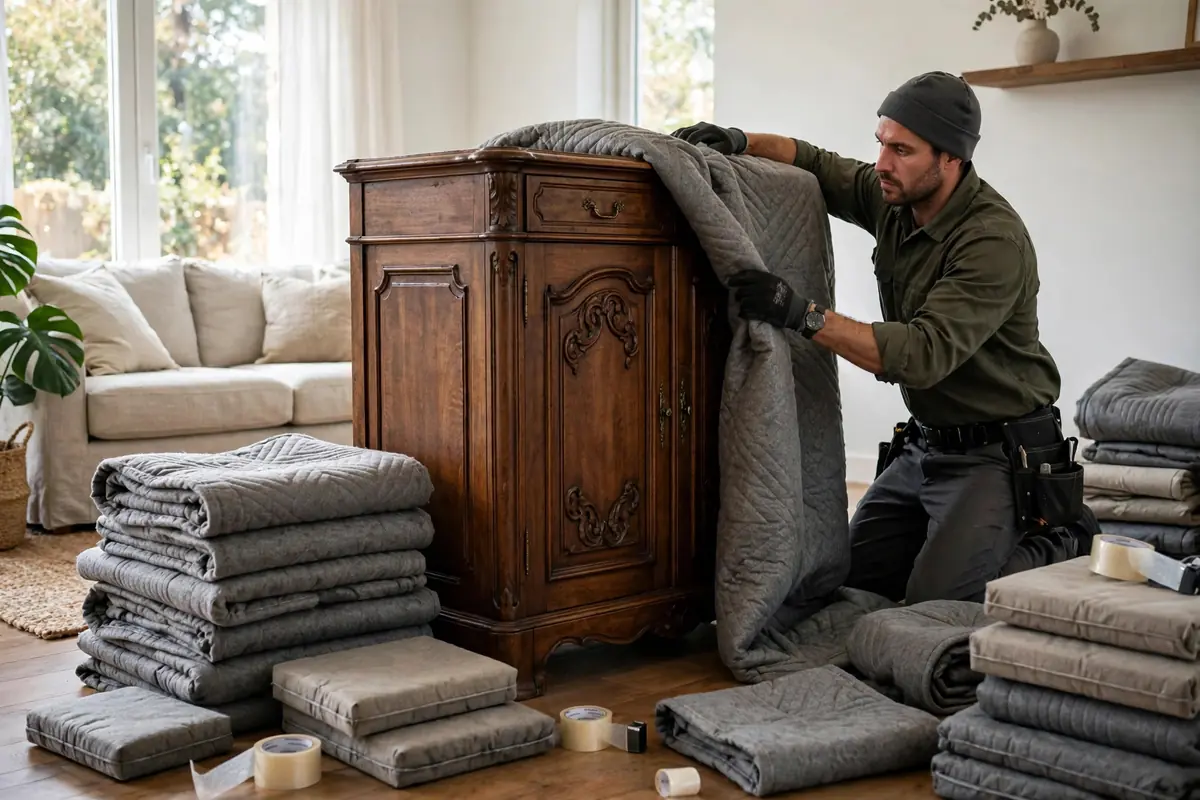
Painted surfaces need particular care. Avoid placing adhesive materials or bubble wrap directly against painted or finished surfaces, and use soft interleaving between wrapped pieces. Never stack weight onto framed art, and store framed pieces upright with padding between them, secured so they cannot fall. Antique furniture should be protected with blankets, kept off direct floor contact where possible, and never used as a shelf for other boxes.
Common mistakes to avoid when storing art and antiques
- Packing damp items, or storing in a space with known damp problems.
- Stacking weight onto framed art or using antique furniture as shelving.
- Skipping photographs and condition notes, so later damage cannot be assessed.
- Assuming a climate-control label means the same conditions everywhere.
- Wrapping painted surfaces directly in materials that can stick or mark finishes.
- Forgetting to check stored items periodically, so problems go unnoticed for months.
When art and antiques need professional handling
High-value, fragile, or unusually large pieces deserve professional handling questions before they are moved or stored. Ask how items are inventoried, how crating is arranged, what handling training applies, and what valuation or liability options cover the pieces specifically.
Sugar Rush Moving is open 24 hours, every day. Call (317) 961-2712 to talk through moving or storing fine art and antiques, and see our specialty item moving page for the questions-first approach used for valuable items.
Frequently Asked Questions
How do you store fine art without damaging it?
Prepare items clean and dry, photograph and inventory them, wrap individually with soft materials, use rigid protection or crating where needed, and choose a space with stable conditions. Check stored items periodically.
What storage approach suits antiques?
It depends on access needs, handling, and how long items will stay. Compare self-service, warehouse, and container models on access, handling, and liability, and confirm conditions with the operator before committing.
Does climate-controlled storage protect art?
The term varies between facilities, so ask what temperature and humidity range is maintained and how it is monitored. Stable conditions reduce risk in general terms, but no label guarantees protection.
How long can you store antiques?
There is no fixed limit. Condition depends on the environment, the preparation, and periodic checks. Inspect stored pieces from time to time, and address damp or damage signs promptly.
Should I use bubble wrap on oil paintings?
Avoid placing bubble wrap directly against painted surfaces, where it can mark or stick. Use soft interleaving against the paint layer, with rigid protection outside. For valuable works, ask a qualified conservator.
Get help with Moving and storage service in Indianapolis
Art and antiques survive storage when three things are right: stable conditions, careful preparation, and honest documentation. Ask the questions in this guide, confirm the answers in writing, and check stored pieces periodically.
Call Sugar Rush Moving at (317) 961-2712 any time. We are open 24 hours, every day.